
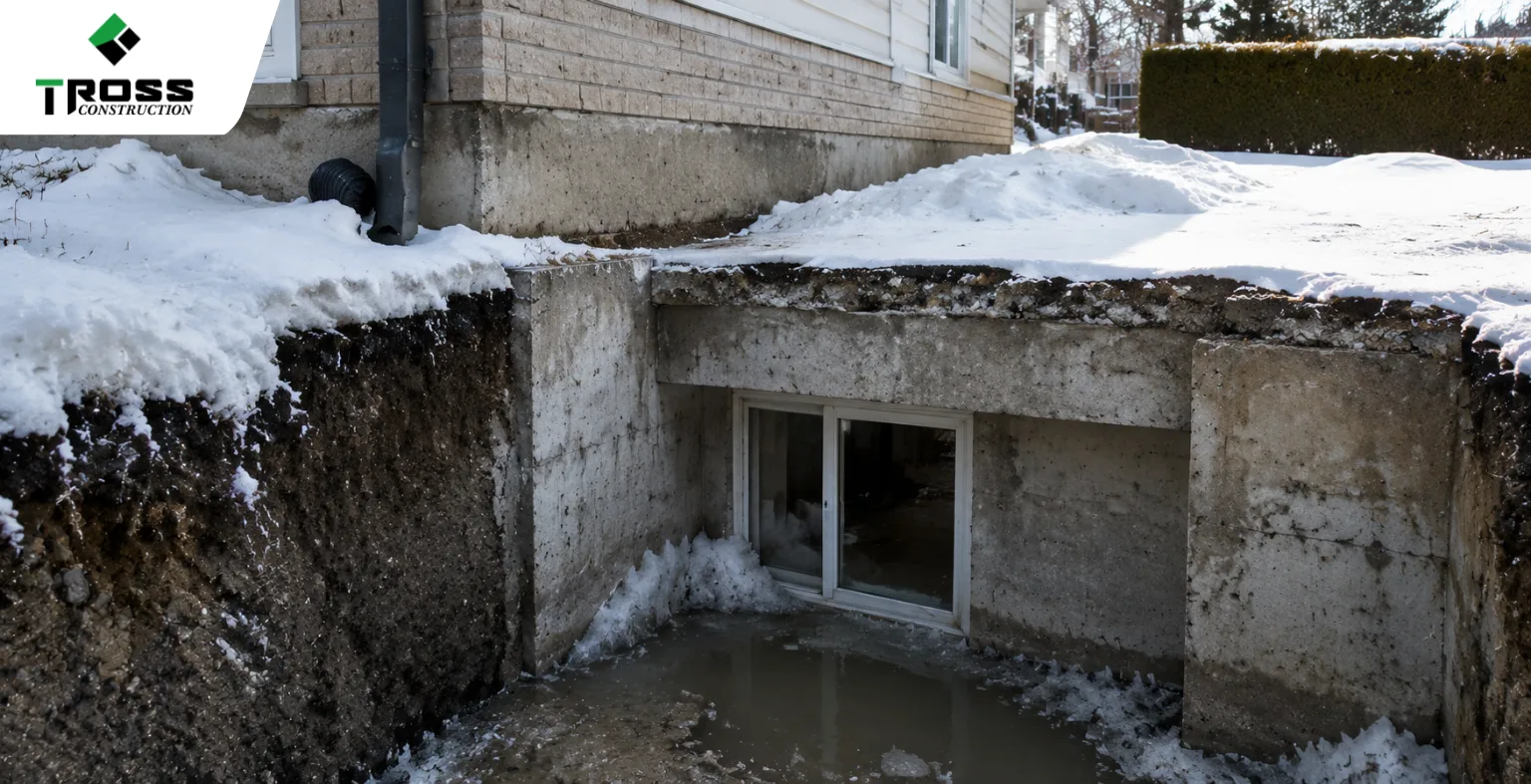
Montreal winters challenge your home’s structural integrity. You face significant risks from freezing temperatures and heavy snow, which can lead to costly foundation damage and basement leaks. Understanding these seasonal stresses helps you protect your property from potential issues.
Key Factors That Exacerbate Basement Moisture
Several elements worsen basement moisture issues during Montreal winters. Poor drainage around your home directs water towards the foundation. Cracks in the foundation allow water intrusion. Inadequate insulation leads to condensation buildup. Perceiving these vulnerabilities helps you proactively protect your home.
Poor Gutter Maintenance and Snow Accumulation
Clogged gutters prevent proper water runoff, causing overflow directly against your foundation. Snowmelt then saturates the soil near your home. This constant dampness creates hydrostatic pressure, forcing water into your basement through any small opening or crack.
Fluctuating Underground Water Tables in Quebec
Winter’s freeze-thaw cycles significantly impact Quebec’s underground water tables. These shifts create a dynamic environment for your foundation. As the ground freezes, water expands, exerting pressure on basement walls. When temperatures rise and the ground thaws, water tables can fluctuate dramatically, leading to periods of high saturation around your home’s footings. This constant movement and pressure increase the risk of water infiltration and foundation damage.
How-To Implement Interior Basement Waterproofing
Protecting your home from Montreal’s harsh winters requires proactive interior basement waterproofing measures. You can effectively manage moisture and prevent water damage by addressing potential entry points from the inside. These interior solutions work to control water that might bypass exterior defenses.
Installing Sub-Floor Drainage and Sump Pump Systems
You can install a sub-floor drainage system to capture water before it enters your basement. This system, paired with a reliable sump pump, actively removes water, diverting it away from your foundation. This proactive approach prevents hydrostatic pressure buildup.
Applying Professional-Grade Sealants to Interior Walls
You should apply professional-grade sealants to your interior basement walls. These specialized coatings create a barrier against moisture infiltration, preventing dampness and efflorescence. This step is a critical defense against humidity and minor seepage. Applying professional-grade sealants to your interior walls offers a significant layer of protection against the persistent dampness often found in Montreal basements. You are creating an impermeable surface that resists water penetration by selecting high-quality, specialized sealants. This barrier not only stops visible water but also inhibits the passage of water vapor, which can contribute to musty odors and mold growth. Proper application involves thorough cleaning and preparation of the wall surface to ensure maximum adhesion and effectiveness, giving you peace of mind throughout the winter months.
Maintenance Tips from Tross Construction
Protecting your home from winter’s harsh realities requires diligent attention. Tross Construction offers practical advice to safeguard your foundation and basement. Knowing these steps can prevent costly damage.
- Regularly inspect your foundation for cracks or signs of water intrusion.
- Ensure your gutters and downspouts are clear and extend away from your home.
- Check your basement for any dampness or musty odors.
Proactive Measures to Prevent Winter Water Ingress
Preventing water from entering your basement starts with exterior upkeep. You should seal any visible cracks in your foundation before the ground freezes. Directing melting snow away from your home’s perimeter is also key.
Monitoring Sump Pump Discharge Lines in Sub-Zero Temps
Your sump pump is a critical defense against basement flooding. You must ensure its discharge line remains clear and functional during freezing temperatures. Blockages can lead to serious water backup.
A frozen discharge line renders your sump pump ineffective, leaving your basement vulnerable to flooding. You can insulate the exposed portions of the line or install a heat trace cable to prevent ice formation. Regularly check that water is freely exiting the line and not pooling near your foundation.
Professional Solutions for Structural Longevity
When to Invest in Foundation Reinforcement
Consider foundation reinforcement when you notice recurring cracks, bowing walls, or sticky doors and windows. Acting quickly prevents minor issues from escalating into expensive structural damage. Protecting your investment ensures your home remains safe and sound for years.
Comparing Interior Remediation versus Exterior Excavation
You have two primary options for addressing foundation issues: interior remediation or exterior excavation. Each method offers distinct advantages and disadvantages, depending on the severity and location of your foundation problems. Understanding the scope of work involved helps you make an informed decision about the best solution for your home.
| Comparing Interior Remediation vs. Exterior Excavation | |
|---|---|
| Interior Remediation | Exterior Excavation |
| Less disruptive to landscaping. | More comprehensive repair. |
| Often quicker to complete. | Addresses external water issues directly. |
| Suitable for minor to moderate issues. | Ideal for severe cracking or bowing. |
Final Words
Presently, your proactive measures protect your home. You must address any signs of foundation stress immediately. Ignoring minor cracks or dampness can lead to extensive and costly repairs. Safeguarding your Montreal property against winter’s freeze-thaw cycles preserves its structural integrity and value. You are the primary guardian of your home’s foundation.
FAQ
Q: How does Montreal’s freeze-thaw cycle specifically affect my home’s foundation?
A: Montreal’s climate experiences frequent temperature fluctuations around the freezing point. Water in the soil expands when it freezes, creating pressure against your foundation walls. When temperatures rise, the ice melts, and the soil contracts. This repeated expansion and contraction, known as the freeze-thaw cycle, can lead to cracks in your foundation over time. Even small cracks can widen with subsequent cycles, allowing more water to penetrate and exacerbate the damage.
Q: What are the common signs of winter-related foundation or basement damage I should look for?
A: Look for several indicators of potential damage. Horizontal or vertical cracks in your foundation walls are a primary concern. Water stains on basement walls or floors, a musty odor, or increased humidity levels can signal water intrusion. You might also notice doors or windows sticking, as foundation shifts can cause frames to go out of square. Uneven floors or bowing basement walls are more serious signs requiring immediate attention.
Q: Can proper exterior drainage prevent winter foundation problems?
A: Effective exterior drainage is a powerful preventative measure. Sloping the ground away from your foundation ensures rainwater and melting snow drain away, reducing hydrostatic pressure. Cleaning eavestroughs and downspouts regularly is also important. Downspouts should extend at least six feet from the foundation to direct water away from the immediate perimeter. A well-maintained drainage system minimizes the amount of water absorbed by the soil around your foundation, lessening the impact of the freeze-thaw cycle.
Q: How do I prepare my home’s foundation and basement for winter in Montreal?
A: Preparing your home for winter involves several steps. Inspect your foundation for existing cracks and seal them with appropriate caulk or hydraulic cement before the cold sets in. Clear leaves and debris from gutters and downspouts. Ensure your landscaping slopes away from the foundation. Consider adding extra insulation to your basement walls to help maintain a more stable temperature, reducing condensation. Disconnect garden hoses and shut off exterior water valves to prevent pipes from freezing and bursting.
Q: What should I do if I suspect my foundation has significant winter damage?
A: If you observe significant cracks, bowing walls, or consistent water intrusion, contacting a qualified foundation specialist is the best course of action. A professional can accurately assess the extent of the damage and recommend appropriate repairs. They might suggest crack injections, exterior waterproofing, or even structural reinforcement depending on the severity. Addressing these issues promptly can prevent further deterioration and more costly repairs down the line.